
An Anthem Original · Video Game · In Development

An open-world action RPG set in a New York City where magic never went away. You are a Lux Agent at LUMYS, working magical law enforcement on cases Mundies will never know happened.
Working title · Project Underlight
Game snapshot
Genre
Open-World Action RPG
Platforms
PC, PS5, Xbox Series
Budget
$45M USD
Target window
2029 – 2030
High concept
An open-world magical detective game in modern New York.
Underlight is a third-person, open-world action RPG set in a hidden magical version of modern New York City. You are a Lux Agent — an elite magical investigator working for the secret American sorcerer government, LUMYS (Law Under MYStic).
It blends supernatural detective work, fast-paced spell combat, aerial traversal, faction politics, and player-driven morality into one city. The fantasy immersion of Hogwarts Legacy with the urban density and traversal freedom of Marvel’s Spider-Man 2 — and a single question underneath all of it: how far a person is willing to go in the name of control, justice, and power.
Core game pillars
Three things this game is built on.
Urban Fantasy Sandbox
A fully explorable magical New York layered on top of the real one.
NYC is the main character. Magic does not live in a separate realm — it is tucked into the city you already know. The world is designed around the principle of constant discovery: random magical crimes occur dynamically across the city, hidden events fire on time, weather, and player alignment, NPCs react to your reputation, and entire locations evolve based on the cases you solved (or refused to).
- Enchanted subway systems running beneath Manhattan
- Secret magical apartment floors hidden from Mundies
- Goblin-controlled black markets in abandoned tunnels
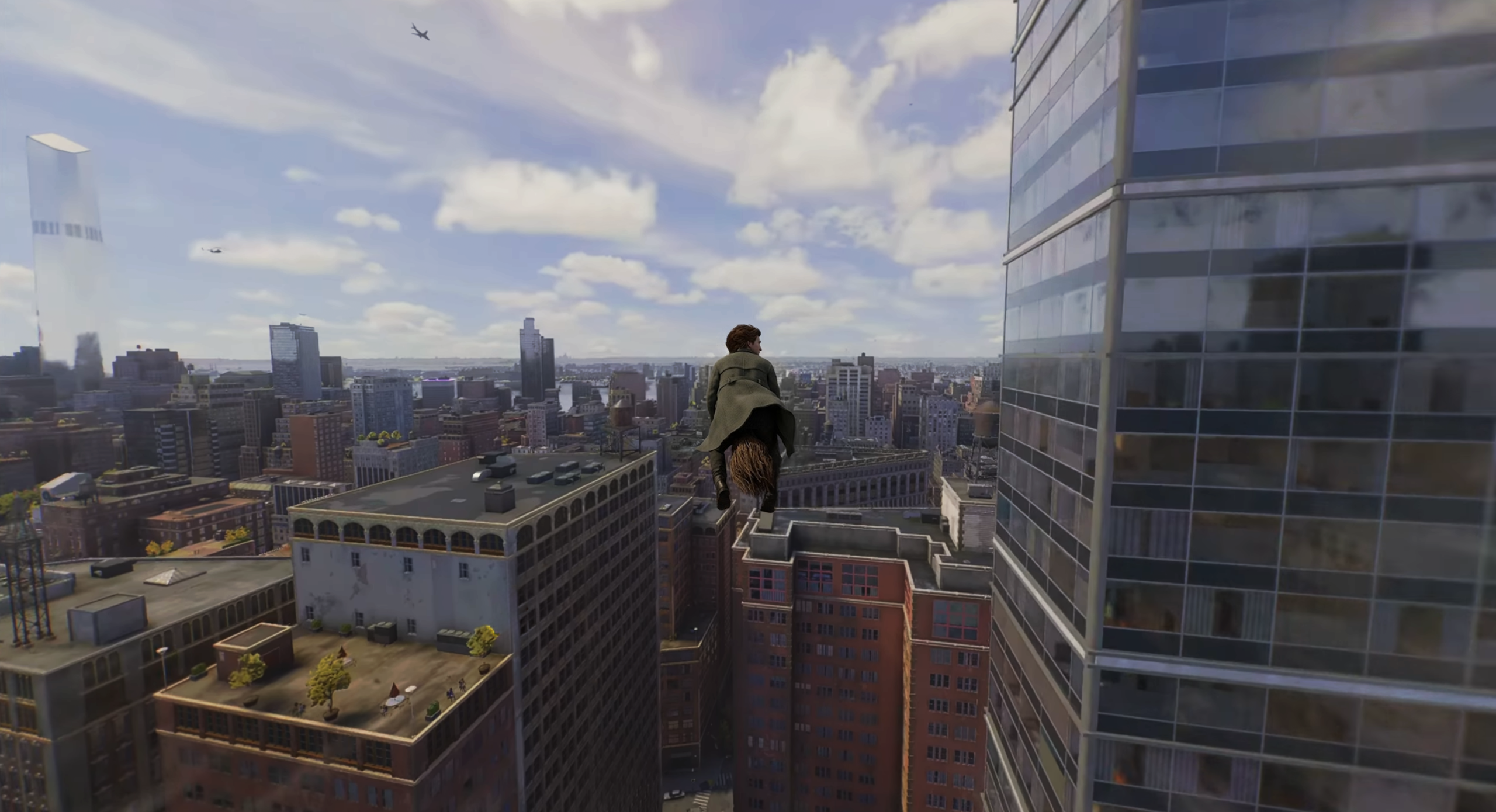
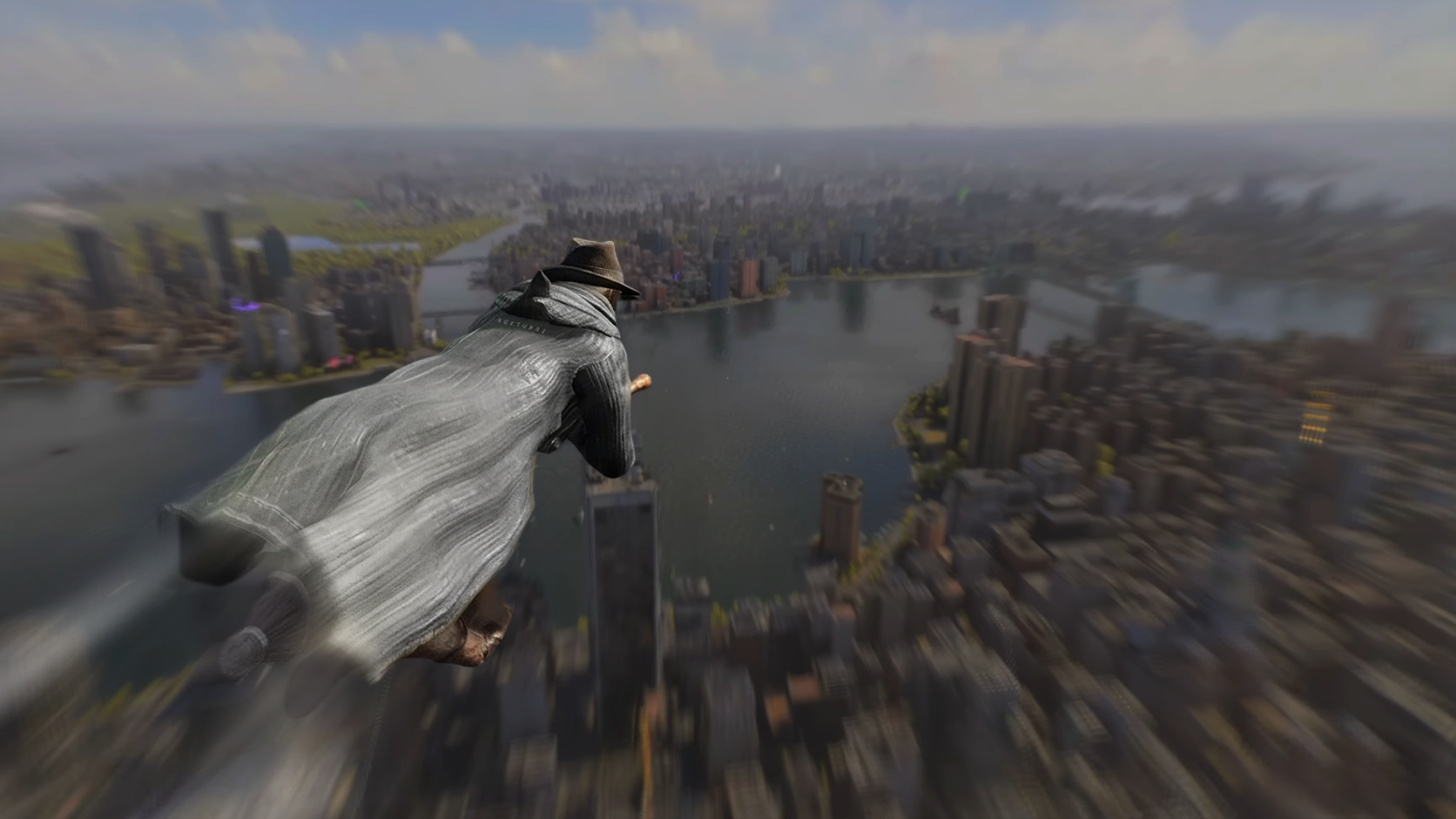
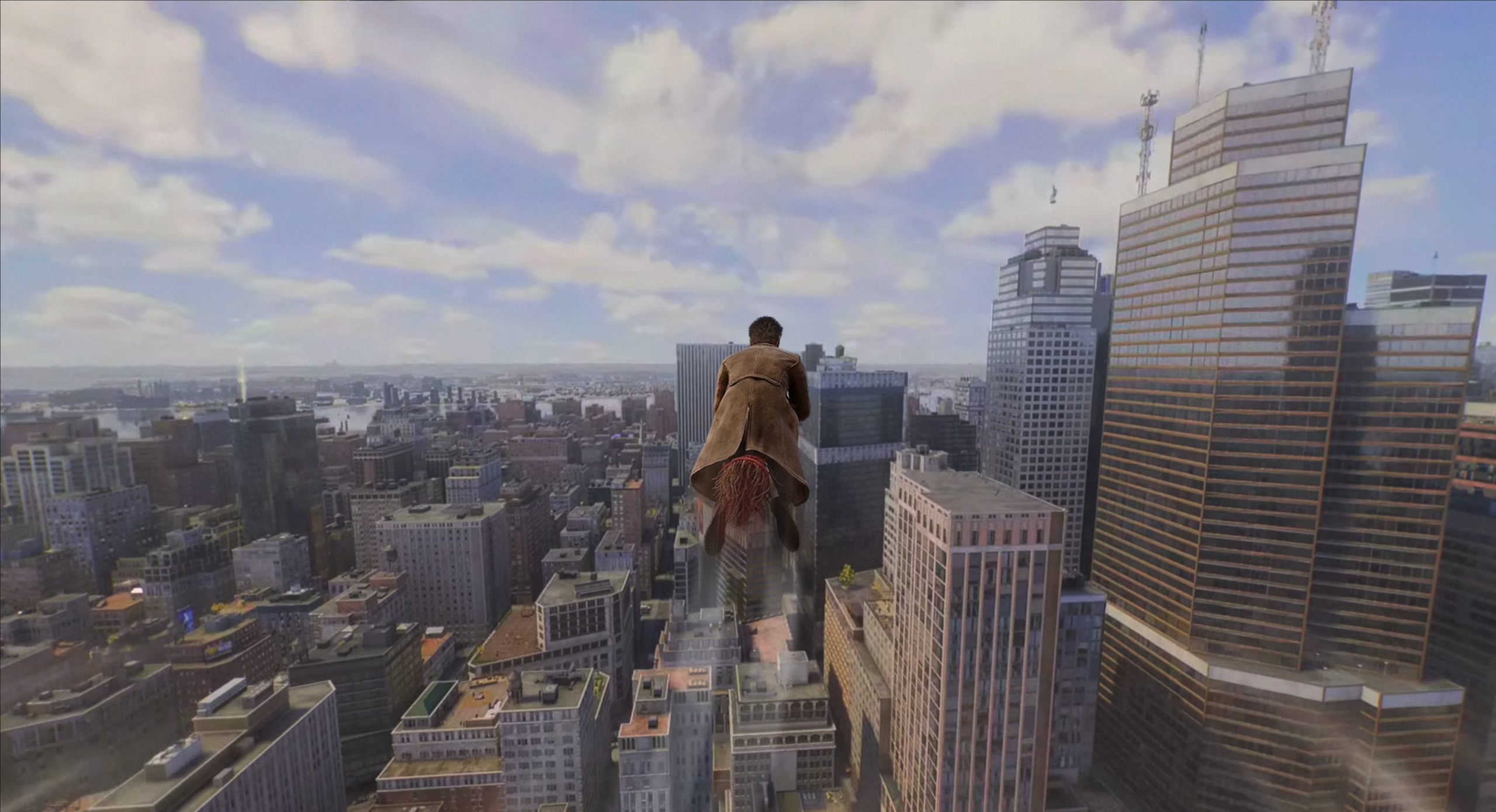
- Rooftop broom-highways between the skyscrapers
- Monster nests beneath Central Park
- Magical speakeasies behind laundromats and bodegas
Spell Combat with Personal Identity
Every sorcerer has a magical signature. Including yours.
Combat is built around mobility, spell combinations, environmental interaction, and magical specialization. Every sorcerer carries a unique magical color signature tied to their personality and alignment — the same hex throws differently from two different hands. Combat rewards creativity, not strict class roles.
- Fast wand casting and telekinetic environment attacks
- Mid-air spell duels, defensive counters, summons, magical constructs
- Close-range magical finishers and combo chains
- Freeze enemies and shatter them with kinetic force
- Electrify flooded subway tracks; trap targets in illusion loops
- Use gravity magic to redirect a moving vehicle
Detective Gameplay & Magical Investigation
A magical detective first, a sorcerer second.
Underlight is built on an investigation loop. A magical incident occurs. You investigate the scene, gather evidence, interrogate suspects, track entities — and then choose how to resolve it: combat, diplomacy, deception, or corruption. Cases range from small street crimes to the city-wide conspiracy that lands on every Lux Agent’s desk: The Anomaly.
- Reconstruct magical memories at crime scenes
- Detect residual spell signatures
- Enter dreamscapes to question the unconscious
- Use mind-reading magic (illegal, but available)
- Solve environmental magical puzzles
- Track creatures across the five boroughs
The Wand
The color is the sorcerer, not the spell.




Every wand glows when it works. Any sorcerer can throw any hex they have the training for, and two of them can throw the same one — but the color will be different every time, because the color is the sorcerer. A deep red on one. A pale green on the next. A blue no one else in the room has ever cast. As many colors as there are sorcerers.
A wand is the most important tool a sorcerer owns, the first thing they reach for and the last they put down. Casting without one is technically possible. It rarely turns out the way the sorcerer hoped.
Story
The case that breaks you out of the desk.
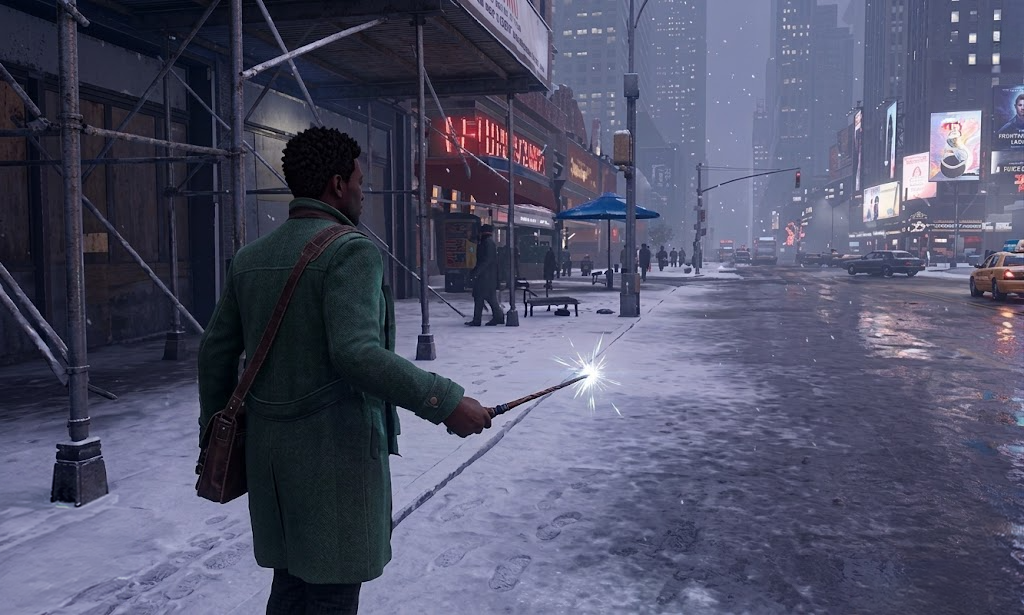
A series of supernatural incidents known as The Anomaly threatens to expose the hidden magical world to humanity. Floating buses. Possessed infrastructure. Violent enchanted objects. Entire blocks disappearing overnight. LUMYS assigns you — a newly promoted Lux Agent — to investigate before public panic erupts.
Early investigations point toward a radical anti-secrecy movement called the Scornlings, led by the revolutionary dark sorcerer Morrigan LaFoe. Morrigan believes sorcerers should no longer hide from humanity. Beneath her rebellion lies something far older and more dangerous.
Her advisor, Agatha Griswold, secretly manipulates both the Scornlings and LUMYS itself in pursuit of an ancient magical force buried beneath New York. The player ends up trapped between three choices: preserve magical secrecy, reform a corrupt system, or embrace dark magic entirely.
Player choice & morality
Not good versus evil. What kind of Lux Agent.
Underlight does not run a single alignment meter. It tracks obsession, ruthlessness, loyalty, magical corruption, and public exposure risk — independently, and visibly.
Things you can do
- Use forbidden spells during investigations
- Cover up magical casualties before LUMYS arrives
- Work with criminal magical factions
- Spare or execute dangerous sorcerers
- Study outlawed magic between cases
- Defy direct orders from LUMYS
What dark magic does
Dark magic is intentionally useful and tempting. The more the player leans on it, the more combat shifts toward aggression, magic visibly mutates, NPCs begin fearing the player, and entire storylines fundamentally change.
By the end, you decide what kind of Lux Agent you became: protector, reformer, extremist, or monster.
Traversal & movement
Fast. Stylish. Vertical.
Manhattan is built to be crossed the long way. Traversal upgrades unlock access to hidden areas and advanced pursuits. Dynamic aerial chases happen across the skyline against rogue sorcerers, magical creatures, and collapsing anomalies.
Factions
Five sides. One city.
LUMYS
The secret American magical government. Enforces secrecy, polices its own, and signs your paycheck.
The Scornlings
Radical dark sorcerers led by Morrigan LaFoe, demanding the end of magical secrecy by any means.
Goblin Syndicates
Criminal magical organizations running underground trade — contraband artifacts, smuggled creatures, illegal spells.
The Hollow Court
An ancient occult elite manipulating magical politics from behind the scenes. Older than LUMYS, and not on its side.
Mundane Authorities
NYPD, federal agencies. Most of them have no idea. A few have started to notice.
Endgame
The city you leave behind.
Choices reshape NYC’s magical ecosystem. The city visually evolves with the player: magical corruption spreads, creatures emerge into the open, districts become enchanted warzones — or the seam holds.
Be the sorcerer detective protecting a magical city — while resisting the temptation to rule it instead.
Adjacent universes
Games that live in this neighborhood.
Not what we copy. What we share rooms with.
Tonally
Control
A federal agency with a building that should not exist, a protagonist who has authority but does not have all the answers, and a story told through case files. Underlight shares its straight-faced approach to weird.
Scope
Spider-Man (Insomniac)
A scoped-down open Manhattan, traversal that respects the geometry of the city, and a hero whose authority comes from outside the gameplay. Underlight uses the same density-over-size playbook.
Vibe
Hellblade II
A 25 to 35 hour campaign that prioritizes craft, audio, and performance capture over checklist content. Smaller scope, deeper feel.
Who it’s for
Built for the action-RPG audience that wants something modern.
Primary
Adults 18-34, action-RPG fans
The Cyberpunk, Witcher 3, Spider-Man, Control crowd. Players who want a single-player story with real combat depth and a world they can spend 30+ hours in.
Crossover
Urban fantasy readers
Fans of The Magicians, John Wick, Sandman, Harry Potter, and Pacific Rim. People who read urban fantasy on the subway and have been waiting for a game that takes the genre seriously.
Core
Open-world completionists
Players who buy these games for the city, not the campaign. The audience that explored every rooftop in Insomniac’s Manhattan and wants more reasons to come back.
Vertical slice plan
What we build first to prove the game.
Before full production, we deliver a playable two-hour slice covering Lower Manhattan, the core magic system, one full mission, and a combat encounter. It is what every publisher meeting needs to see.
Slice runtime
~2 hours
Playable area
Lower Manhattan
Vertical slice budget
$4.5M USD
Ready
Q2 2027
How the money is spent
Development budget
Comparable scope: A Plague Tale: Requiem (~$45M), Hellblade II (~$50M). Underlight uses the same density-over-size production model: a tight 75-person core, strategic outsourcing, and a scoped open world that grows after launch.
From green light to launch
Production timeline.
Four phases over roughly four-and-a-half years, sized to match the funded scope.
What we’re seeking
A partnership to ship Underlight.
01 · Funding
$45M production budget.
Publisher financing, platform-exclusivity deals, or co-development partnership. Open to milestone-based financing.
02 · Platform partner
Console or storefront.
PS5, Xbox Series, or Steam-first. We are open to a console marketing partnership in exchange for timed feature support.
03 · Studio team
Senior creatives.
Hiring a creative director, lead engineer, narrative lead, and combat designer. Reach out if your last shipped title was in this space.
From the creator
Want to talk about Project Underlight?
Publishers, platform partners, financiers, and senior game developers, the line is open. Request the full pitch deck, the vertical-slice spec, or just have a first conversation.